Showing posts with label Aviation. Show all posts

Sunday, 14 April 2024

Project Windsock

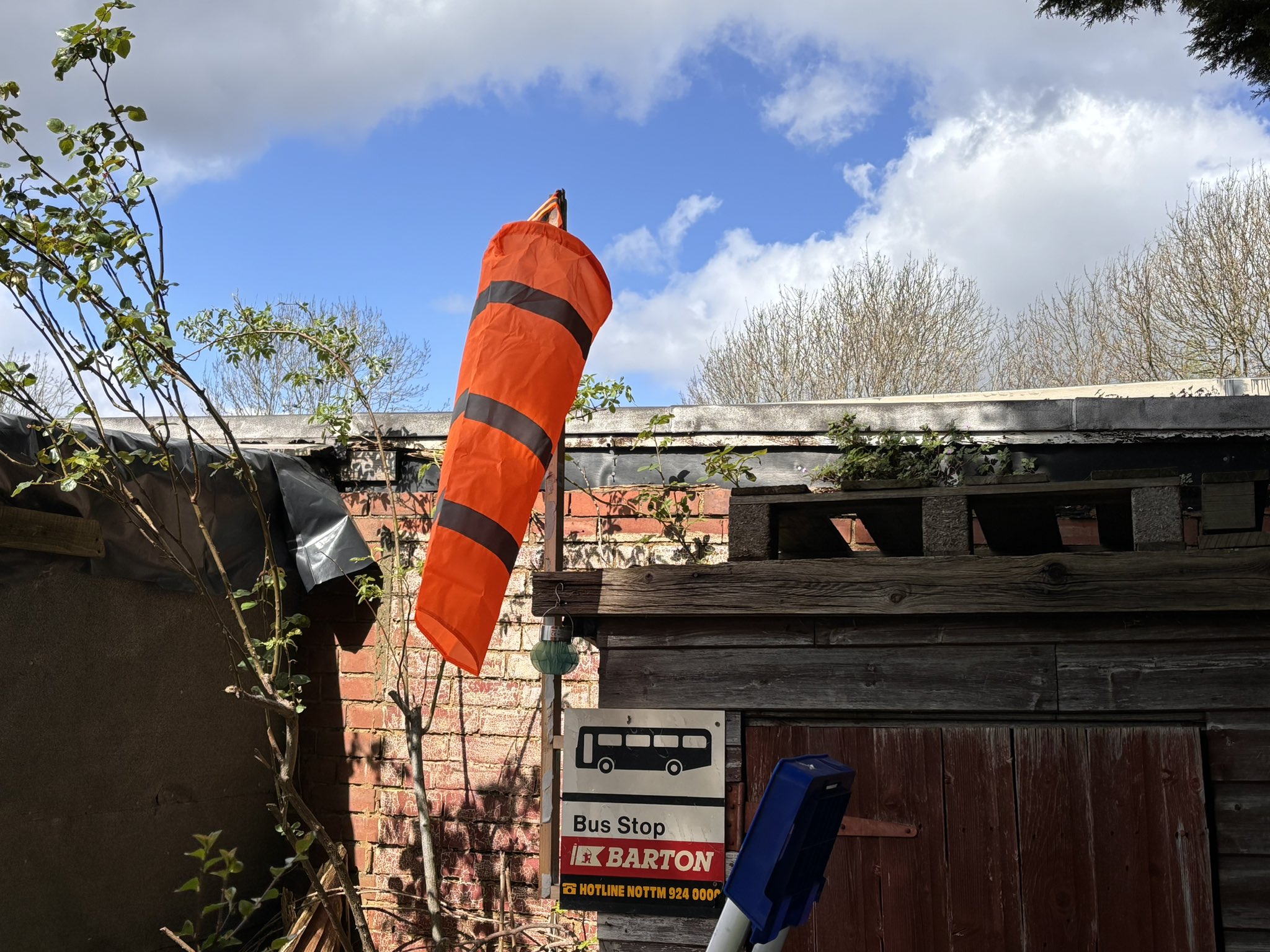
When i saw you could get a windsock for less than ten pounds on Amazon the only question is, why not? So, my windsock is now installed on the shed. What use this is for me is unknown, but i love it.


Tuesday, 13 December 2022

Thursday, 1 September 2022

Wednesday, 10 August 2022

Sunday, 31 July 2022

Down the airport

Yesterday i went down to Marston Green (my birthplace of course) and went to the end of Birmingham Airport's runway in Sheldon Country Park to watch some planes. Amazingly the last time i was here was in 1990, i remember this as i came after my last A-Level exam! It has changed a bit, i don't remember the benches being here before though it was a long time ago! You can see my photos here.


Thursday, 28 July 2022

Prop takeoff

Another video from London City Airport, this one being a prop!

Tuesday, 23 April 2019

FAST Museum

FAST is the Farnborough Air Sciences Trust and it's museum at Farnborough is dedicated to the work of the Royal Aircraft Establishment which conducted aeronautical research for the British armed forces, especially the Royal Air Force, since the early years of the twentieth century until 1991 when the RAE was merged into other MOD research groups. The museum is small but has plenty of interest including a replica of the Cody Flyer - the first British aeroplane to successfully fly in 1908... at Farnborough of course! Photos from the museum can be seen here.


Sunday, 25 November 2018

RAF Cosford

I visited RAF Cosford yesterday in Shropshire, unlike the other RAF museum in London i visited a couple of months ago I have been to Cosford before a few times. However the last time i went a couple of years ago i completely missed one of the hangars! I rectified that omission this time and took many photos of course. You can see my photos here.


Sunday, 21 October 2018

Manchester Science & Industry Museum

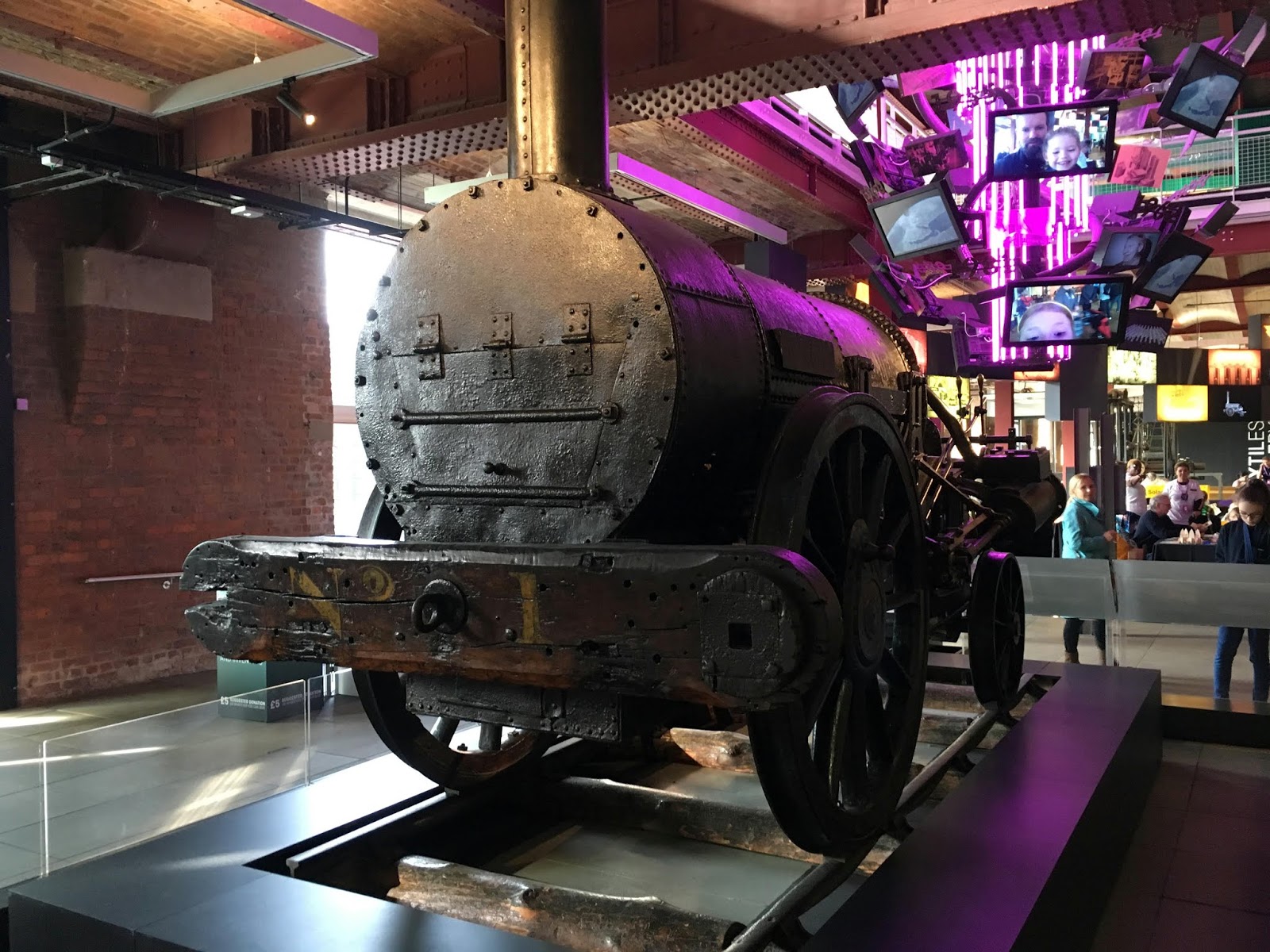
The Science & Industry Museum in Manchester is part of the Science Museum group along with the main museum in London and the National Railway Museum in York. I visited the Science & Industry Museum yesterday and greatly enjoyed the exhibits, especially the railway and aviation halls. Among the exhibits at the museum include surviving parts of the very first "proper" railway Manchester Liverpool Road (from 1830), an Avro Shackleton and Rocket - maybe the only steam locomotive that can rival Flying Scotsman for fame. You can see my photos from the museum here.


Sunday, 9 September 2018

RAF Museum London

I went down to London yesterday to visit the RAF Museum in North London. It is a very impressive site, similar in scale and quality of collection to the other RAF museum up at Cosford. I particularly enjoyed seeing the Heinkel He162 Salamander there, the insane project in coming up with a jet fighter in a few months at the end of World War 2 always fascinating me, especially as the resulting aircraft was somehow pretty decent. You can see my photos here.


Tuesday, 4 September 2018

British Airliners (5) : Vickers Viscount

The Vickers Viscount was one of the most successful British airliners of the post-war period, taking advantage of the new turboprop engines developed in the late 1940s by Rolls Royce.

Information
First flight: 1948
Withdrawn: 2009
Number built: 445
The Viscount first flew in 1948 and entered service in 1953 being the first turboprop airliner to enter service and the first turbine powered airliner to carry fare paying passengers. It was designed for short to medium haul journeys on routes with lower passenger numbers. Originally it had a fairly short fuselage and could carry up to thirty two passengers but later versions were extended. The Viscount had a pressurised cabin and large cabin windows and proved popular with passengers and airlines.

The then new turboprop propulsion proved it's superiority of traditional pistol engines and despite some initial scepticism from airlines soon proved a hit and four hundred and forty five were eventually built. It had a long service life, finally leaving airline service in Britain in 1996 but continued in service elsewhere especially in Africa. The final Viscount flight was in early 2009 in the Democratic Republic of Congo.
In service with British Midland in the early 1980s at Birmingham Airport

Preserved Viscount at Brooklands

Tuesday, 28 August 2018

British Airliners (4) : BAC One-Eleven

The short-haul BAC One-Eleven is one of the most successful British airliners. Unlike most types covered in this series it sold a healthy amount and not just to the British state owned airlines and air force. Although no longer in passenger service two are known to remain in service with Northrop-Grumman as test beds.

Information
First flight: 1963
Withdrawn: Early 2000s (except
for testbeds)
Number built: 244
Development of the One-Eleven began in 1956 with a thirty-two seat turbojet powered design known as the Hunting H.107. The design was later amended to use turbofans and the passenger capacity was increased to fifty nine. However the project, by then under the umbrella of the British Aircraft Corporation, was still considered not ready for market. Finally a stretched version with eighty seats gained favour and became the BAC 111 (later One-Eleven).

The aircraft first flew in 1963 a year before it's major rival the Douglas DC-9. Despite the crash of the prototype customers were keen on the One-Eleven with a healthy order book when it entered service in 1965. Nearly two hundred and fifty One-Elevens were built, about half sold to US airlines. As the One-Eleven was not designed to the tight criteria of the state airlines like the VC10 and Trident it had a much wider appeal with customers. Production continued into the 1980s with the final aircraft being built under licence in Romania.

The One-Eleven remained in widespread service until the 1990s but began to fall foul to more stringent noise regulations and the last were withdrawn from airline service in the early 2000s.
In British Airways livery

Two views of a preserved One-Eleven at Brooklands

This aircraft ended it's days as a research test bed

Tuesday, 21 August 2018

British Airliners (3) : Scottish Aviation Twin Pioneer

The Scottish Aviation Prestwick Pioneer was a single engined short take off and landing (STOL) light transport that saw a deal of success and served with the RAF and other airforces in the 1950s and 1960s. Scottish Aviation designed a larger twin-engined transport, calling it the Twin Pioneer.

Information
First flight: 1955
Withdrawn: 1968 (RAF military service)
Number built: 87
Like the smaller Pioneer the Twin Pioneer was a STOL transport and able to operate off a runway just a few hundred metres long.

Although military operators including the RAF and Royal Malaysian Air Force (with whom it was the first type they operated) were a major customer for the Twin Pioneer civil orders also came in too. It was popular with small airlines who operated off rough unprepared runways and also used by oil and mineral survey teams and government surveyors. It was retired by the RAF in 1968 though continued to be used elsewhere for a number of years.
Preserved RAF XL993 at RAF Cosford

The Twin Pioneer had a triple vertical tail

Rear view

Tuesday, 14 August 2018

British Airliners (2) : Bristol Britannia

The Bristol 175 Britannia was a fine aircraft once the problems with it were finally sorted out, but by then it had been over taken by the jet airliner.

Information
First flight: 1952
Withdrawn: Early 1990s
Number built: 85
The Britannia was designed as a medium-to-long haul airliner for empire routes. It had an advanced fuselage design and was powered with the new Bristol Proteus turboprop. The Britannia first flew in 1952. However the plane began to run into problems during it's development and testing especially with the new and unproven engines. No less than sixteen engine failures occurred during test flights. One of the prototypes crashed after an engine fire.

Finally, and after much modification, the Britannia gained it's airworthiness certificate in 1955 with the first two deliveries to BOAC just before the end of the year. Although the Britannia was lauded for it's quietness and speed the Boeing 707 was only a couple of years away and potential customers decided to wait. Only eighty were sold to airlines.

Although its front line airline service was fairly brief (BOAC retired the type in 1965) it did survive in service for many years, an airline in the Democratic Republic of Congo continuing to use the Britannia on cargo flights into the early 1990s.
Three views of former RAF Britannia XM497 at RAF Cosford


Tuesday, 7 August 2018

British Airliners (1) : Vickers VC10

This new series will looks at some of the many airliners produced by the British aircraft industry over the decades. Starting with the mightiest of them all...

Like many airliners the origins of the VC10 lay with a military type. In the early 1950s Vickers were approached by the government to design a military transport based on the Valiant bomber. The V.1000 was to be powered by four Rolls-Royce Conway turbofans, the first turbofans to enter service and later used on the Boeing 707-400 series [1]. The V.1000 was to have a civil version called the VC7 able to carry up to one hundred and twenty passengers. Unfortunately the V.1000 (and VC7) were cancelled 1955.

Information
First flight: 1962
Withdrawn: 2013 (military service)
Number built: 54
However the British national airline (then BOAC) needed a 707 type aircraft for African and Asian routes. These routes usually had short runway and thus the VC10 was designed with excellent short field performance though as it was heavier and higher powered than the 707 and DC-8 it was comprised economy wise [2].

The VC10 reused a lot of the design of the VC7 including the Conway turbofans however it had them at the rear of the aircraft in two sideways pairs instead of buried in the wings. BOAC placed an order for thirty five aircraft.

The VC10 first flew from the Vickers factory at Weybridge in 1962. By then Vickers had designed an improved Super VC10 having more powerful engines and a longer fuselage. Production lasted until 1970 with only fifty four VC10s being built, most going to BOAC. Ironically the success of the 707 and DC-8 had seen many airports with shorter runways extend them for the American airliners thus negating the one key advantage of the VC10.

The VC10 remained in service with BOAC (later British Airways) until 1981. Fourteen ex-BA VC10s were sold to the RAF where they had a much longer service life as transports and tankers. The last RAF VC10 was retired in 2013. Ten VC10s have been preserved, though not all in complete condition.
Former British Airways G-ARVM at Brooklands Museum

Under the tail of A40-AB, former Omani VIP jet

A40-AM

Front fuselage of G-ARVM at Cosford

[1] Charles Kennedy, Boeing 707 (Haynes, 2018) p. 37
[2] Keith Wilson, Vickers/BAC VC10 (Haynes, 2016) p. 11
Wednesday, 9 May 2018

Brooklands Museum

The centrepiece to my trip to Surrey was intended to a visit to the Brooklands Museum in Weybridge. Though unfortunately due to the heat and the hectic travelling earlier that weekend I was running on fumes by the time I got to the museum on Sunday afternoon. I still enjoyed myself there though with it's display of aircraft, buses (in the London Bus Museum) and old cars. It is a great location with much to see, just maybe better to visit when you have a bit more energy! I did take a lot of photos though which you can see here.

Highlights were the Concorde and VC-10 and the Formula 1 cars. But there was so much else too.


Monday, 27 March 2017

Woking

Woking is only 10 minutes away from Guildford on the train and i went there on Saturday morning. Of course i took some photographs at the railway station which has a marvellous Art Deco signalbox and some photographs along the Basingstoke Canal which goes through the town.

Perhaps most interesting though were some of the unexpected items in the town itself, a Hawker Hunter on a plinth and a Martian tripod statue! The latter because the Martians in War of the Worlds first landed near the town and indeed HG Wells was living in the town when he wrote the story.


Tuesday, 22 November 2016

A mysterious drone

Many times as i lay in bed at night as a kid (and beyond) i would hear a far off drone. Some sort of aircraft of course but with the otherwise peace of the night the drone felt so alone. I would listen to the drone until it faded away and would wonder what plane it was (i of course was a plane spotter back then too). As it seemed like a smaller propeller plane i imagined it could be a light aircraft, maybe some specialist transport link running late at night. Maybe even MI5 or the US government running a black network of secret agents.

Although i've always lived under the BHX flight path (and indeed my own house is a mile closer to the airport) my fascination with the drone went away, no doubt replaced by girls or Class 47 diesel locomotives. In recent years however i've started noticing the drone again, though a somewhat different tone, not as mournful. A few months ago i was in the garden on a light night when i heard the drone, and as it was a clear night i could finally see the source of this drone (and also could see what it was on a flight tracking app, this wasn't available to me in the early 1980s!)

It turned out to just be a propeller regional airliner flying high above, maybe flying into East Midlands Airport. Some of the romance has now been lost. My fantasy of secret missions have turned into the last flight out of Belfast of the day. How disappointing, sometimes its better not to know everything and keep some mysteries alive. I suspect the drone i knew so well was that of RR Dart turboprops which powered so many airliners back in the 70s and 80s. The newer breed of turboprop are no doubt much more efficient, but don't sound as good!
A photo i took at B'ham Airport in the 1980s of a British Midland F27, great drone!

A modern airliner, not as good a drone!