Showing posts with label Bedfordshire places. Show all posts

Monday, 28 July 2025

Bedfordshire places (5) : Apsley Guise

Aspley Guise is a village on the border in Bedfordshire, on the border with Buckinghamshire, near to Milton Keynes.

Aspley Guise is derived from Aspenlea, meaning aspen clearing, and from the de Guise (de Gyse) family who were lords of the manor in the 14th century. The first recorded settlement in the area dates to the 10th century and the parish was mentioned in the Domesday Book. The area remained mostly agricultural with two windmills in the parish mentioned in the 16th century. The village is situated at a cross roads and has remained small. A market charter was granted in 1267 by Anselm de Gyse though the market has long since been discontinued.

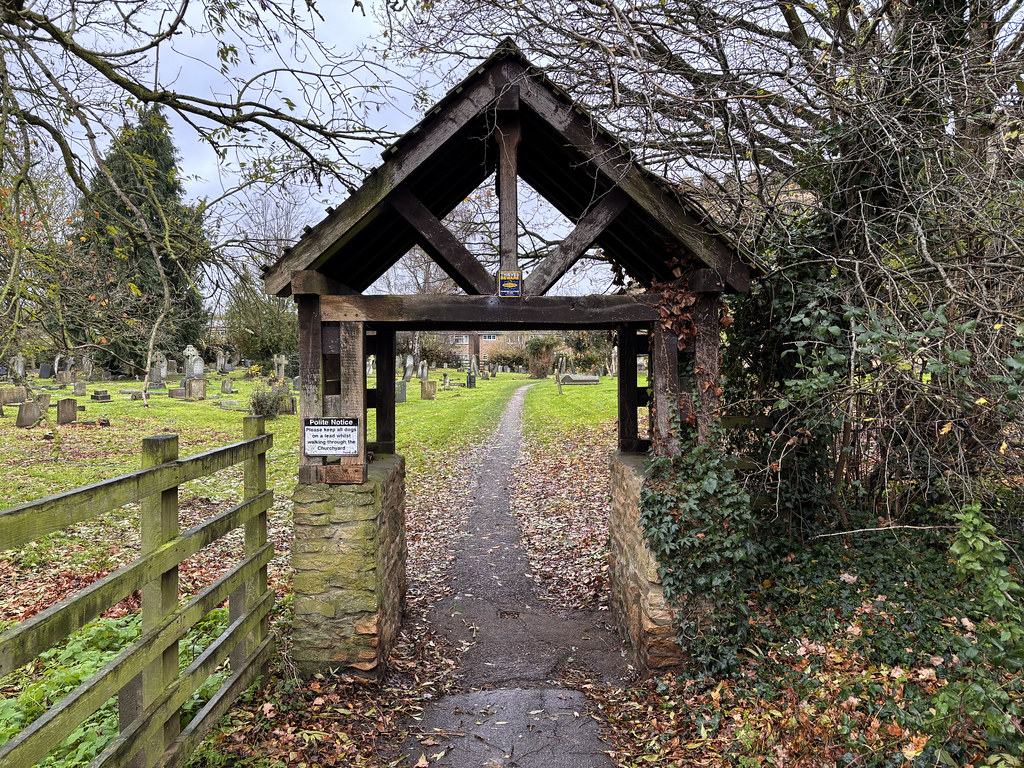
By the 20th century brick making and clay extraction had become major industries though nowadays many inhabitants will work (and commute to) elsewhere. The parish church of St Botolph (a seventh century Anglo-Saxon abbot and scholar) dates from the 13th century, from around 1223. The church was extensively reworked in the early nineteenth century. The church is made from ironstone with ashlar dressings, the tower from limestone rubble.

The church tower dates from the fifteenth century at least and has a clock that dates from then too. The oldest monuments in the church date from the 1400s including a tomb effigy thought to be of Sir William Tyrington who died in 1400.


Monday, 21 July 2025

Bedfordshire places (4) : Lidlington

The village of Lidlington is in the Marston Vale in central Bedfordshire.

Lidlington was mentioned in the Domesday Book, the manor of Litinclitone (as it was known then) being held by the Abbess of Barking. After the dissolution, the manor was surrendered to the Crown before being handed over to Edward Ditchfield in 1628. In 1801, the manor became the possession of the Duke of Bedford. The Duke built a Gothic style church in the village in 1845.

Next to the village was a brickworks (a common feature in the Marston Vale), the site is now a large Amazon warehouse. Also next to the village is Millbrook Proving Ground, once the test track of Vauxhall cars, but now used by many manufacturers and is one of the largest vehicle testing centres in Europe.

Lidlington railway station opened in 1846. The main station building (now a private residence) was in the Gothic Revival style on the insistence of the 7th Duke of Bedford.


Monday, 14 July 2025

Bedfordshire Places (3) : Stewartby

Stewartby is a model village in central Bedfordshire.

Stewartby was built for workers of the London Brick Company in the first half of the 20th century, named after the Stewart family who were directors of the company at the time. Work began on the village in 1926, the new village being based around two farming settlements called Wootton Pillinge and Wootton Broadmead. The village was named Stewartby in 1935. At it's time the Stewartby brickworks was one of the largest in the world, it finally closed in 2008. The final chimneys were demolished in 2021.

Next to the village is a water park and some other leisure facilities. The village gained a sixth form college in 2013. The village has a station on the Marston Vale Line, this station was originally for Wootton Pillinge and opened in 1905.


Monday, 7 July 2025

Bedfordshire Places (2) : Leighton Buzzard

Leighton Buzzard is a market town in the south west of the county close to the Buckingamshire border.

Leighton Buzzard may have been founded as early as the 6th century. The name Leighton is thought to be derived from the Old English for farm clearing in the woods (Leah tun). The Buzzard part of the name may come Beau-desert and was added to the town's name in the 12th century. However, there are other theories about the origin of the town's name.

Leighton Buzzard gained a market charter in 1086, and it became a successful market town thanks to it's good transport links to local agriculture and to London. These transport links included the Grand Union Canal which flows through the town. Leighton Buzzard gained a railway station in 1838 which is now part of the West Coast Main Line. One of the oldest surviving narrow gauge railways also has a terminus in the town (Leighton Buzzard Light Railway). A more modern transport link built close to the town is the M1 motorway.


Monday, 30 June 2025

Bedfordshire Places (1) : Marston Moretaine

Marston Moretaine (or Moreteyne) is a village in central Bedfordshire.

The village has Saxon origins, Marston Moretaine being listed in a Saxon charter in 969 as Mercstuninga. In the Domesday Book, the village was listed as Merestone. The name is derived from the Old English for settlement by a marsh. The manor was held by the Moretaine family for a time. The official name of the parish was changed to Marston Moreteyne in 2018 though Moretaine is still used in many places such as road signs.

The village is located next to the Millennium Country Park in the Marston Vale in central Bedfordshire. The village is located in a redevelopment area so might be expected to expand in future years. The village is served by Millbrook railway station on the Marston Vale Line.

St Mary the Virgin's parish church dates from 1340 though most of the surviving church was rebuilt in the mid 14th century. The church unusually has a detached tower from the next of the church, the tower being about 20m from the north wall of the chancel.